HYROX has quickly become one of the fastest-growing competitive fitness formats worldwide. Athletes are no longer preparing purely for endurance events or strength competitions – they are preparing for both.
A typical HYROX race combines eight 1 km runs with eight functional workout stations, including sled pushes, lunges, rowing, wall balls, and farmer’s carries. The result is a high-intensity hybrid event that places significant demands on both aerobic capacity and muscular endurance.
This raises an important question for many athletes:
How should you fuel for a sport that sits somewhere between endurance racing and strength-based competition?
Understanding the demands of HYROX can help guide smarter nutrition strategies across training blocks, particularly when it comes to fueling the day-to-day work that ultimately drives performance.
Fueling the Training Week
When people think about HYROX nutrition, the focus often goes straight to race day. But in reality, performance is built during training.
A typical HYROX training week might include running sessions, strength training, conditioning work on the SkiErg or Rower, and race-specific workouts. Many athletes also train around work or study commitments, meaning sessions may happen early in the morning, late in the evening, or even twice in one day.
Because of this, consistent fueling across the training week becomes one of the most important factors influencing progress.
If you’ve ever started a session under-fuelled, you may recognise some of the signs:
- the workout feels harder than it should
- you fatigue earlier than expected
- your pacing or movement quality starts to drop
- recovery between sessions becomes harder
At first, these changes can feel small. But over time, under-fuelling can limit training quality, slow recovery, and make it harder to accumulate the training load needed to improve.
On the other hand, when you fuel your training well, you’re more likely to sustain intensity, maintain movement efficiency under fatigue, and get more out of every session.
Key Nutrition Pillars for HYROX Training
HYROX places unique demands on the body. You’re not just running, and you’re not just lifting, you’re repeatedly transitioning between the two.
Because of this, fueling strategies need to support both endurance performance and high-intensity muscular work. Three key nutrition pillars can help support demanding HYROX training weeks.
1. Pre-Training Nutrition
Starting a HYROX session well-fuelled is one of the easiest ways to improve training quality. With workouts often combining running, erg work, and strength movements, carbohydrate availability plays a big role in sustaining intensity and delaying fatigue.
A simple way to approach pre-training fueling is to adjust what you eat based on how close you are to your session.
- 3-4 hours before training
Aim for a balanced meal with carbohydrates, protein, and some vegetables e.g., rice or potatoes with lean protein.
- Around 2 hours before training
A lighter carbohydrate-focused snack can help top up energy levels. Think yoghurt with muesli, toast, or fruit with a muesli bar.
- 30–60 minutes before training
Opt for quick, easily digestible carbohydrates such as a banana, sports drink, rice cakes, or raisin toast.
Everyone’s tolerance is different, so use training sessions to experiment and find what works best for you before harder workouts.
Intra-Training Nutrition
For shorter sessions, intra-workout fueling may not always be necessary if you’ve fuelled well beforehand.
However, during longer or more demanding sessions – particularly race simulations or conditioning workouts lasting longer than an hour – additional carbohydrates can help maintain performance.
Many athletes benefit from around 30–60 g of carbohydrate per hour, which can come from:
- sports drinks
- gels
- carbohydrate chews
Practising these strategies during training also helps you refine what will work best for race day.
Post-Training Nutrition
Recovery nutrition becomes especially important during heavy training phases, particularly if you’re completing multiple sessions per week or training on consecutive days.
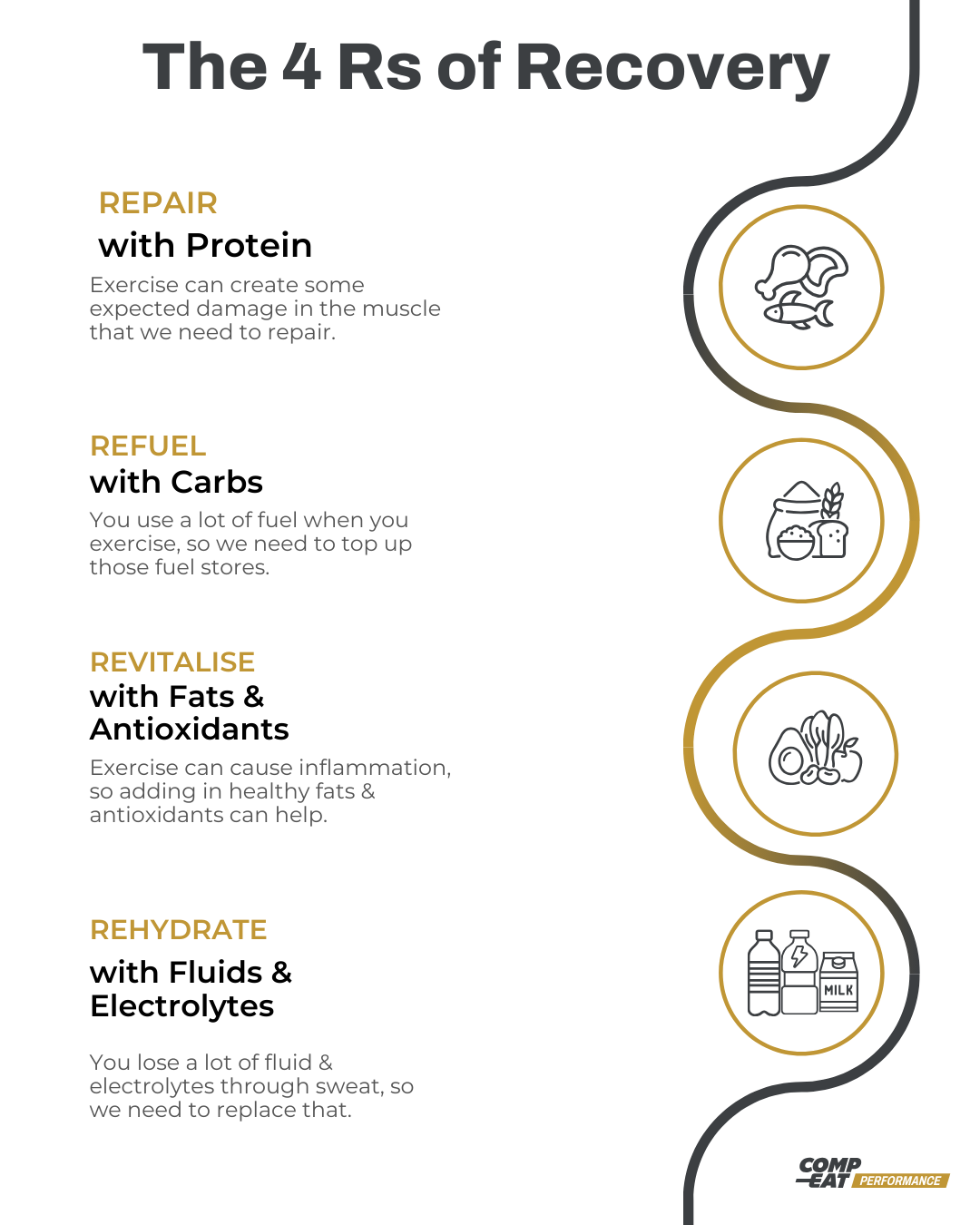
A useful way to think about post-training nutrition is through the “4 R’s” of recovery:
Ready to Fuel Your Training Better?
Getting the most out of HYROX training doesn’t come from perfect nutrition, it comes from building consistent fueling habits that support your sessions, recovery, and long-term progress.
Whether you’re preparing for your first race, pushing for a new PB, or simply trying to train with more energy and confidence, our Compeat dietitians are here to help.
We support athletes with:
- Practical fueling strategies tailored to your training schedule
- Guidance around pre-, intra-, and post-training nutrition
- Ongoing support to help you train, recover, and perform at your best
Book a free introductory call with our team to chat about your training and explore how nutrition could support your HYROX goals.